
An AI Coach Is Only as Good as Its Library
Mark Dixon · March 20, 2026
Skills are all the rage right now in the world of generative AI (or LLMs if you like). What’s a skill you ask? Literally not much more than a short text file containing niche and/or domain specific knowledge. A bit like a super compressed “
And here’s the thing - in our experience with Friday, an AI coach with “only” well thought out prompting will only get you so far. I’ll be briefly technical and propose that it’s all about the context: AI models can only handle so much text before things start to break down. If you try to create the world’s biggest most comprehensive coaching prompt to guide ChatGPT… well not only will things break down, but it’ll end up costing you a small fortune in token costs to boot.
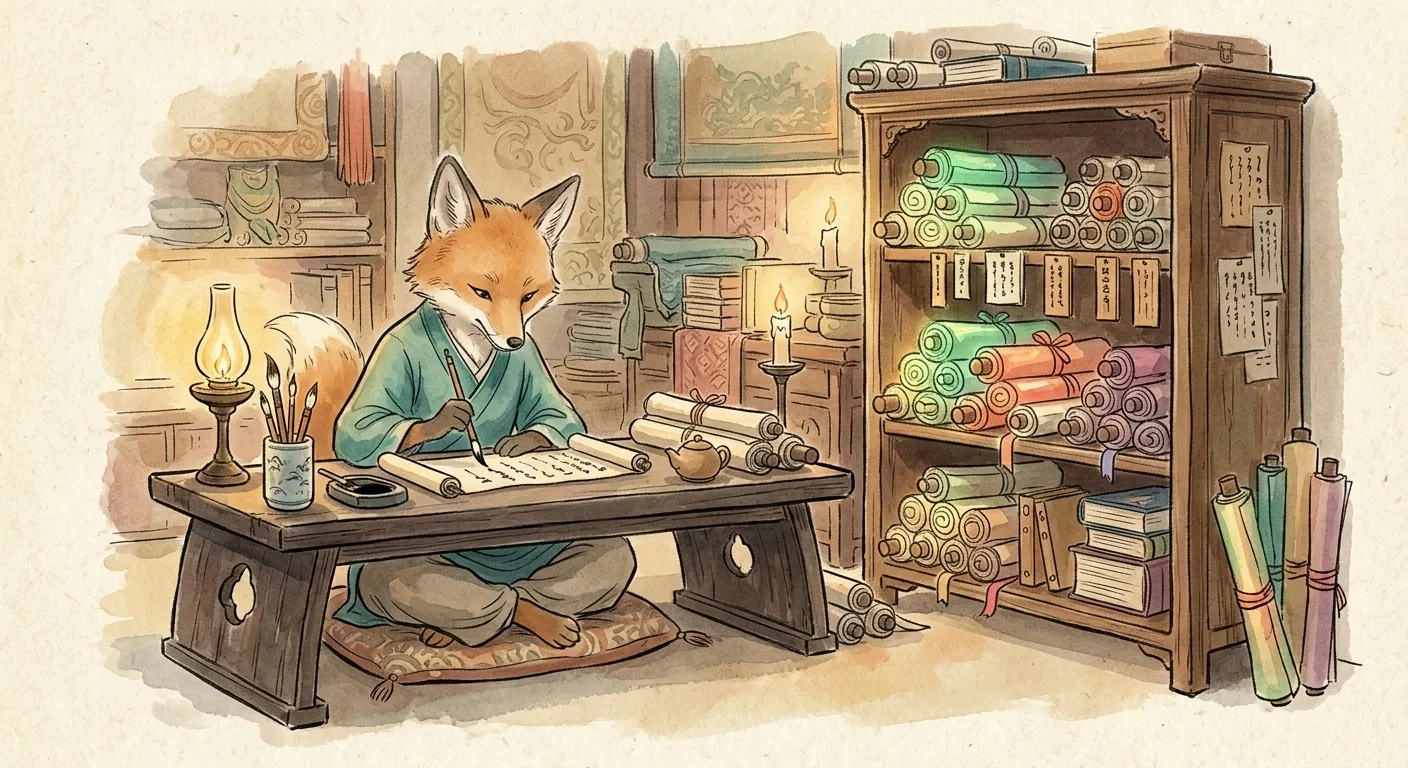
So this is where skills come in: the AI knows about what skills it has but only a title and blurb for each. A bit like looking at a bookshelf. Then when it senses that you are talking about something where a specific skill might be useful it grabs the book off the shelf, loads that skill in (think Neo in The Matrix learning Jujitsu) and can use it to help you.
Friday’s Coaching Resources
So just like any good human coach, we realised during early testing that Friday needs to be able to dip into a set of skills as and when a need arises. We decided to call them coaching resources because they are typically smaller than regular AI skill files. Each coaching resource has a title, description, keywords, purpose and content. It is the content that helps Friday know what to do, the others are there to help Friday to quickly (and cheaply) find which resources it needs.
I thought we should share a resource with you all as an example, in order to illustrate things better:
# Coaching Protocol: Phone-Free Hour

Category:: Challenge

Description:: A daily practice of disconnecting from your phone to notice
what emerges when you slow down and walk without digital distraction.

Tags:: digital detox, mindfulness, presence, observation, a creative year,
disconnection, embodiment, daily practice

Purpose:: To cultivate presence and awareness by creating space between you
and constant digital stimulation, noticing how your mind and body respond
to unplugged time.


## Overview
This practice invites you to claim one hour each day—ideally a walk or
movement—without your phone. The absence of digital distraction creates
space for observation, thought, and authentic experience. Over time, you'll
notice patterns in how you feel, what you think about, and what emerges
when the noise quiets.

## Coaching Approach

### 1. Set the Stage & Prepare
Help them identify a realistic time to disconnect—morning walk, lunch
break, or evening stroll. Frame it as an experiment in noticing, not
deprivation. Ask what they'll bring (journal, music, nothing) and suggest
a known route so their mind is freed from navigation.

### 2. Walk & Observe
The focus is awareness, not achievement. Invite them to notice their
impulses, the texture of their thoughts, their body's response. After the
walk (ideally before checking their phone), ask them to note three
things: How did it feel? What surprised you? What did you notice about
yourself?

### 3. Reflect & Adjust
Over the week, check what patterns emerge. Does it get easier? What
thoughts appear? If a full hour feels impossible, adapt it down to 20
minutes or three days a week. The goal is consistency that feels possible,
not perfection.

## Facilitation Tips
- Keep your tone gentle and curious—many feel anxious about disconnecting.
  Frame it as discovery, not discipline.
- Normalize resistance: "Your phone is designed to keep you coming back.
  That's important information."
- Celebrate small wins: 30 minutes counts. Three times this week counts.
- Adapt the practice to them, not the reverse—ask what would make it easier.
Small but powerful
So these are somewhat smaller than typical AI skills. But unlike skills where an AI typically has a few or up to a dozen depending on the user, Friday as a creative coach has lots of them. At the time of writing Friday currently has 238 coaching resources spread over many categories (such as knowledge, concepts, challenges, exercises, tasks and reading) and this number is constantly growing.
Frida and Friday work together to refine new skills every week. The skills range from common coaching wisdom to specific techniques or exercises that Frida has developed during her 10+ years of coaching people. And they are focused specifically on creativity: the staying-power problem, dealing with the blank page, second-guessing yourself, etc. When people ask me “how is Friday any different than just asking ChatGPT to coach me?”, I usually start here - Friday has access to hundreds of battle tested resources that ChatGPT just isn’t designed to provide you with - the more time you spend with Friday the easier it can find that little nugget of knowledge that can help you move forward.
Finding the nuggets
Friday uses a method called semantic searching to find a small set of relevant coaching resources. A semantic search is different from a literal search - Friday doesn’t need to search for specific keywords, it can use any terms and the semantic search automatically finds similar concepts. So Friday doesn’t need to get lucky and specifically search for “phone-free” - rather, it can search for what it feels the user needs right now. For example Friday could notice a pattern of behaviour of a client and decide to do a search for “lack of feeling in the moment” and the above challenge would likely rank highly. Then the LLM model (the brain behind Friday) can then use its judgement to decide which resource to load and use.
So hopefully you now have a better picture of what a coaching resource is, and how Friday makes use of them. The key take-away is: coaching resources are what separates an AI coach from a chatbot; tested methods, not plausible-sounding (but all to often sycophantic) advice!
Ready to meet your creative coach?
Friday helps you find your voice, develop your ideas, and bring your creative work to life — through conversation.